MCSS Newsletter - Summer 2026

Letter from the Director

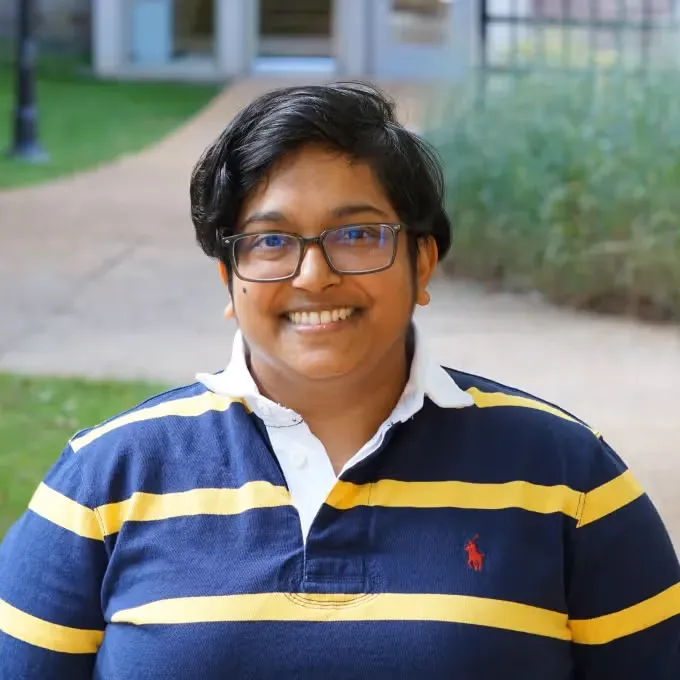
William McKinnon

The back end of August has arrived and the heat has started to abate, if only just a bit. Likewise the tumult of the past year in the scientific community has seemed to calm, if only slightly. Federal research funding has, depending on the field, been suspended, delayed, and restarted. But space science in the U.S. remains strong and vibrant. What has been lost most clearly is a sense of predictability. On the horizon are new rules governing what research can be performed and how it can be conducted, but even this is up in the air given the strong pushback by the scientific community and Congress. But we persevere!

Those of us here at Washington University who pursue Earth and planetary science, physics, and space science are extraordinarily lucky in that the McDonnell Center for the Space Sciences, created in a burst of forward thinking decades ago, and nurtured at key junctures along the way, has been able to provide for research continuity in these difficult times. The ability to act independently in the face of shifting political winds is no small thing. As I have previously noted, the kind of work MCSS does is vital for American prosperity and well-being, and we can all be justifiably proud of the work MCSS Fellows, students, staff, and collaborators have accomplished in the past year, as highlighted in this newsletter, in the MCSS Messenger, and in related articles.

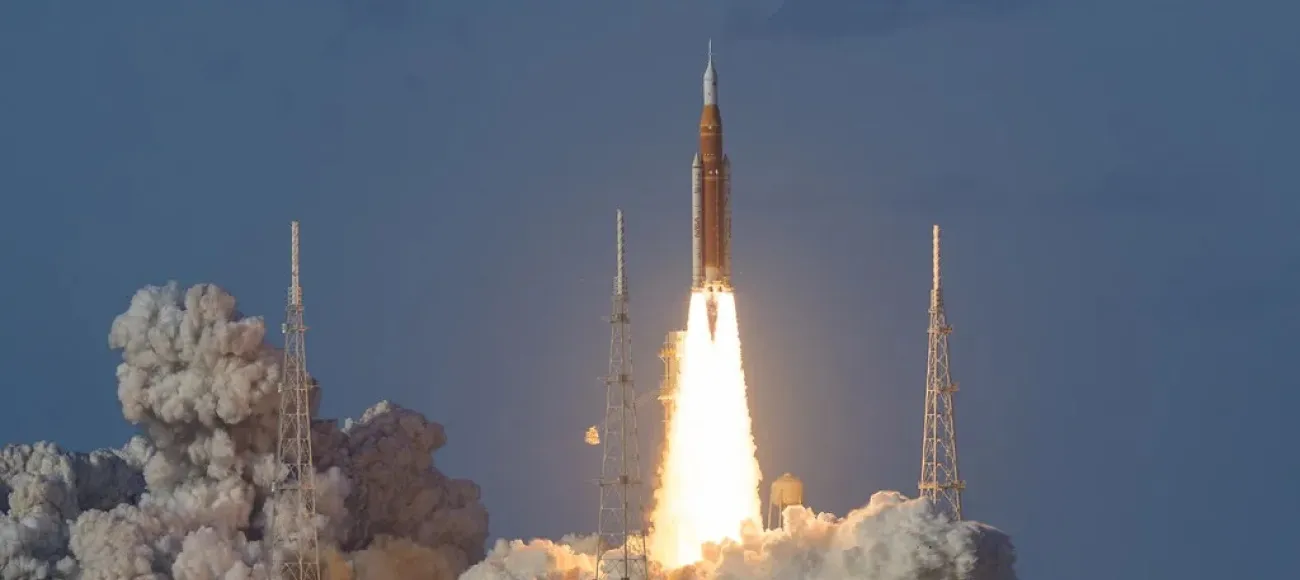
I would be remiss if I did not tout certain major space science advances of the past year. With Artemis II, human beings journeyed to the vicinity of the Moon for the first time in over 50 years. While not a scientific mission per se, it was inspirational globally and a harbinger of renewed human exploration of and enhanced robotic activity on the lunar surface. Down in Chile, the Vera Rubin Observatory is now online, and as I write this, the Nancy Grace Roman Space Telescope is preparing to launch. These new facilities, along with the relatively new James Webb Space Telescope, are revolutionizing astronomy and astrophysics and will continue to do so. As a colleague of mine said recently, “We are swimming in data!” (Just don’t drown.)

There are, of course, external forces that could drastically affect the conduct of space science in the years to come, but for the moment the McDonnell Center for the Space Sciences is well-poised to take advantage of these new developments and capabilities. The next year will see a new, permanent director for MCSS, and with that come new opportunities and directions to meet the challenges of the 2030s and beyond. Ad astra.

Distinguished Lecture Series

McDonnell Distinguished Lecture Series

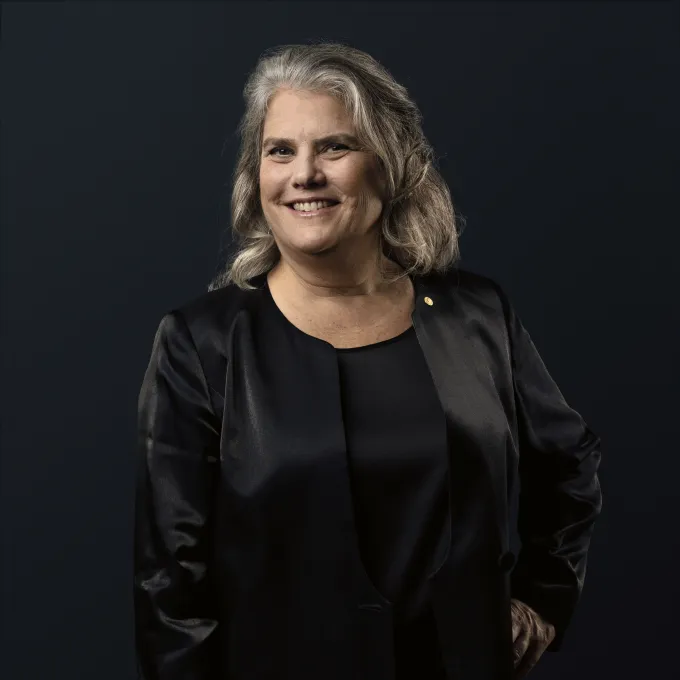
Andrea Ghez

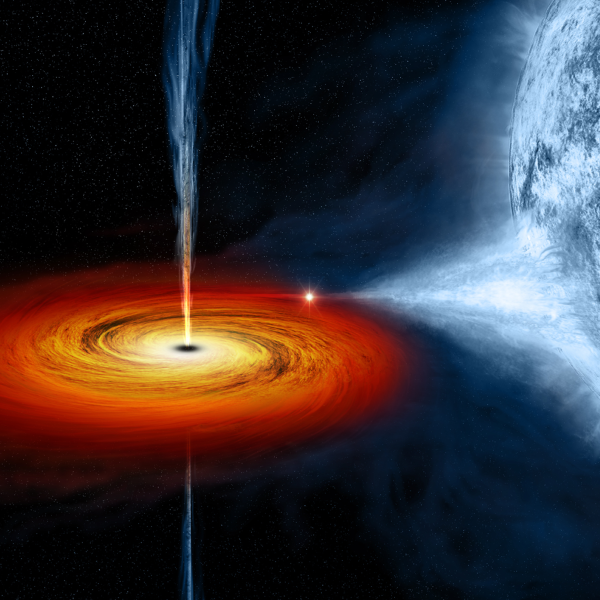
Andrea Ghez, Nobel Laureate, Professor of Physics & Astronomy, University of California, Los Angeles, presented the 2026 McDonnell Distinguished Lectures. The colloquium was titled, "Our Galactic Center: A Unique Laboratory for the Physics & Astrophysics of Black Holes" and the public lecture was titled, "From the Possibility to the Certainty of a Supermassive Black Hole."

Kenneth Kelton, 1954-2025

Kenneth (Ken) Franklin Kelton, the Arthur Holly Compton Professor Emeritus of Physics at Washington University in St. Louis, died Tuesday, Oct. 28, 2025, following complications from lymphoma treatments. He was 71. For nearly four decades, Kelton helped foster the remarkable growth in the Department of Physics at Arts & Sciences, which he chaired from 2007 to 2012. He retired from WashU in 2024.

Henric Krawczynski has won the 2026 Bruno Rossi Prize

Henric Krawczynski, the Wilfred R. and Ann Lee Konneker Distinguished Professor in Physics and chair of the department, has won the 2026 Bruno Rossi Prize, the most prestigious prize from the High Energy Astrophysics division of the American Astronomical Society. The prize was awarded for Krawczynski’s “pioneering contributions to the theory, instrumentation, and scientific interpretation of X-ray polarimetry,” according to the prize announcement.

Rita Parai selected as a plenary speaker at the 2026 Goldschmidt Conference

Rita Parai, associate professor of Earth, environmental, and planetary sciences, has been selected as a plenary speaker at the 2026 Goldschmidt Conference, one of the field’s leading international meetings. Parai’s selection recognizes her contributions to understanding how noble gases are used to study the formation and evolution of Earth and other planetary bodies.

Dougal Hansen explores Earth's ice

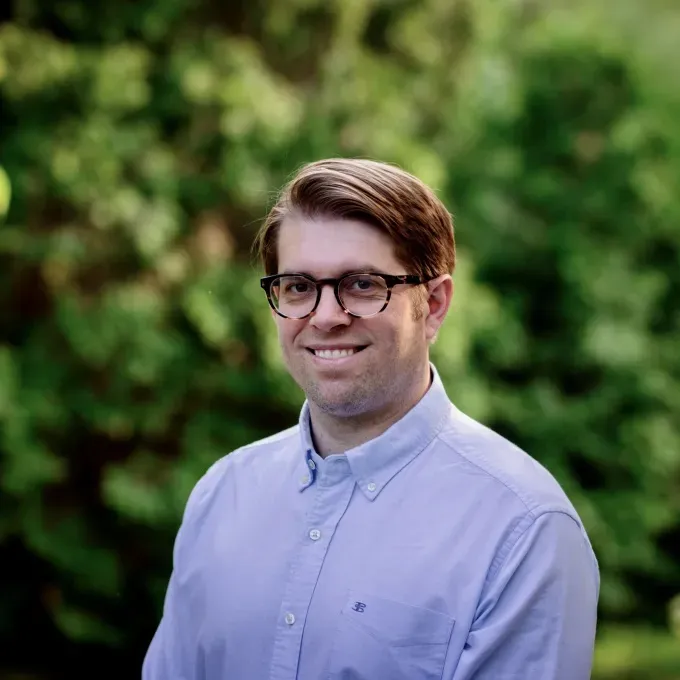
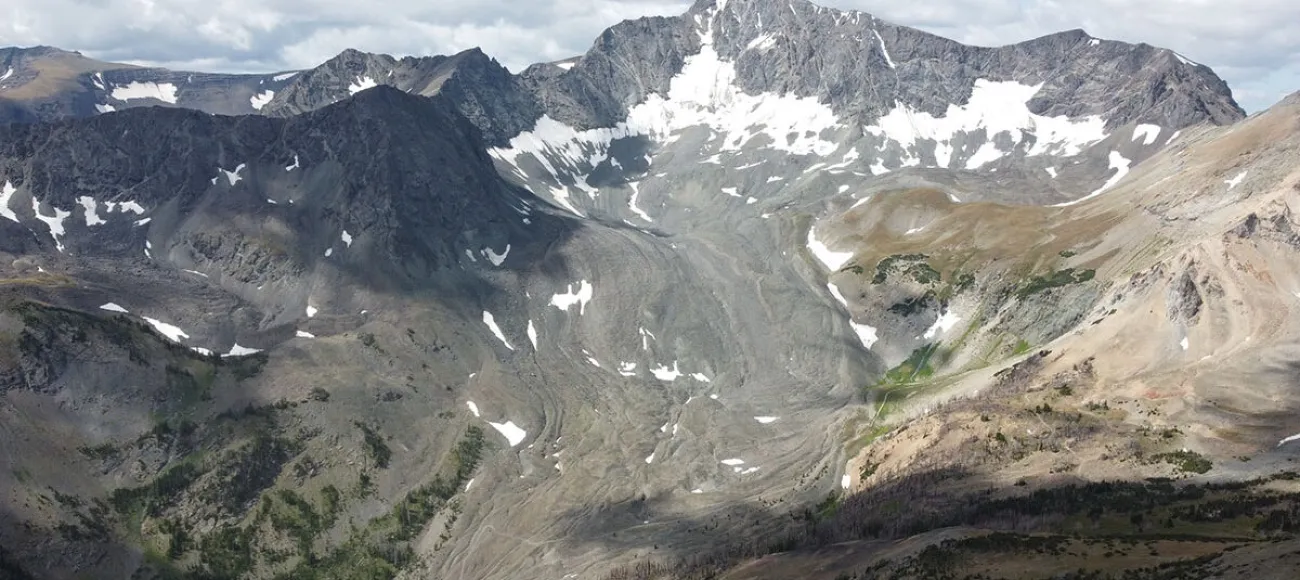
Dougal Hansen recently joined the Department of Earth, Environmental, and Planetary Sciences as an assistant professor. He is a glaciologist with broader interests in understanding the processes shaping Earth’s surface in the cryosphere. His interdisciplinary research combines field observations, geophysics, sedimentology, and numerical models to study glacier motion and geomorphic change in high-latitude environments.

Faculty Awards & Recognition

David Fike

Glassberg/Greensfelder Distinguished University Professor in Arts & Sciences and Chair of Earth, Environmental, and Planetary Sciences David Fike has been named a fellow of the American Association for the Advancement of Science (AAAS), one of the most distinguished honors in the scientific community.

Viatcheslav Solomatov​

Professor of Earth, Environmental, and Planetary Sciences Viatcheslav Solomatov​ has been elected as a Fellow of the American Geophysical Union. This program recognizes AGU members who have made exceptional contributions to Earth and space science through a breakthrough, discovery, or innovation in their field.

Trevor GrandPre

Assistant Professor of Physics Trevor GrandPre is an inaugural recipient of Scientific American’s Young Scientist Award. The award recognizes “the next great superstars in science, technology, and medicine.”

Bronwen Konecky

Associate Professor of Earth, Environmental, and Planetary Sciences Bronwen Konecky has won a prestigious NSF CAREER Award to study rainfall changes in the Central America and northern South America region.

William McKinnon

Director of the McDonnell Center for the Space Sciences, Professor of Earth, Environmental, and Planetary Sciences William McKinnon was installed as the Clark Way Harrison Distinguished Professor in a ceremony on September 30, 2025.

James Buckley

Professor of Physics James Buckley has been named the Charles M. Hohenberg Professor of Experimental Physics in recognition of his distinguished achievements in research, teaching and service.

Mark Alford

Professor of Physics Mark Alford received the Humboldt Research Award, an honor that recognizes internationally renowned scholars whose work has had a lasting impact on their field.

Saori Pastore

Professor of Physics Saori Pastore has been promoted to Professor of Physics, effective July 1, 2026.

Chong Zu, Trevor GrandPre, & Dougal Hansen

New MCSS Fellows The McDonnell Center welcomed Chong Zu, Trevor GrandPre, and Dougal Hansen as new MCSS Fellows during the year.

McDonnell Center Graduates

May 2026

PhD in Earth, Environmental and Planetary Science

  • Katie Billings
  • Henry Dawson
  • Cameron Moye
  • Sam Patzkowsky

PhD in Physics

  • Liam Brodie
  • Sohee Chun
  • Ephraim Gau
  • Jonah Hoffman
  • Pazit Rabinowitz

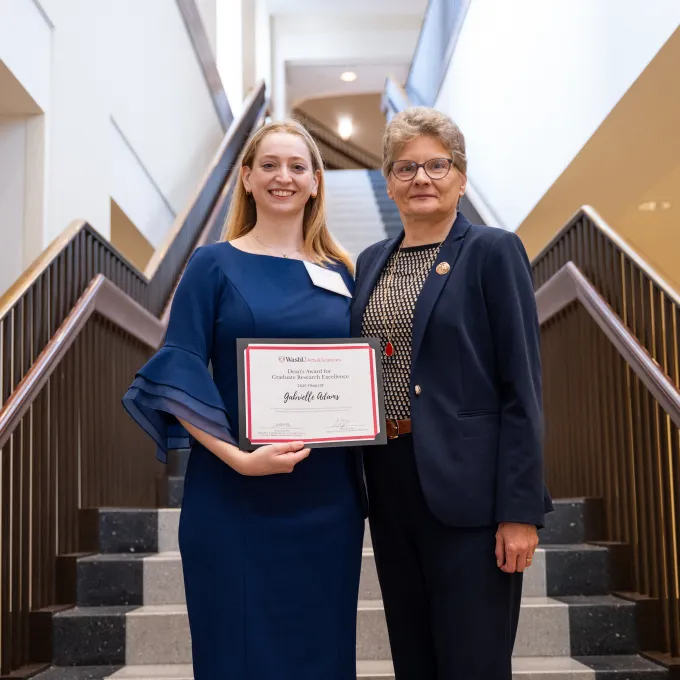
McDonnell Center Graduate Fellow Gabrielle Adams was a finalist for the 2025 Dean’s Award for Graduate Research Excellence. With her advisor Katharina Lodders, she models gas and condensation chemistry in evolved stars using chemical thermodynamics to understand stardust formation from such dying stars.

Gabrielle Adams

Dean’s Award for Graduate Research Excellence, Finalist

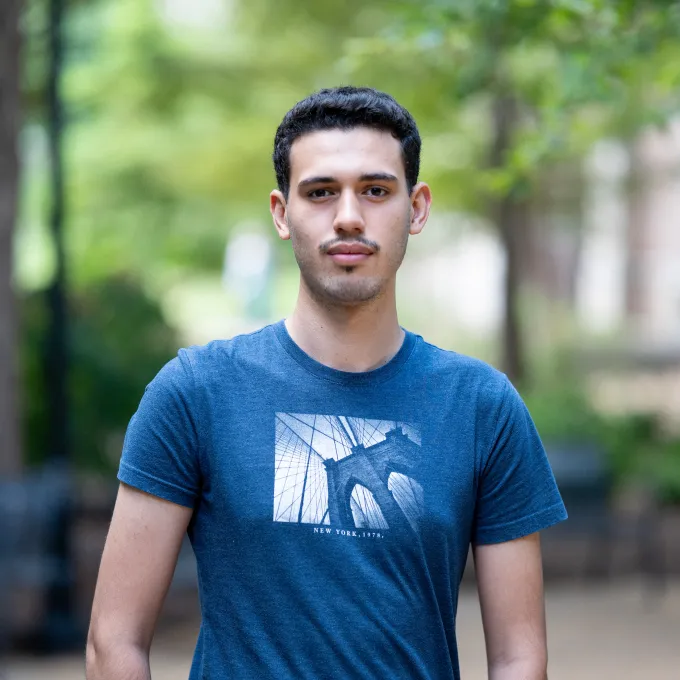
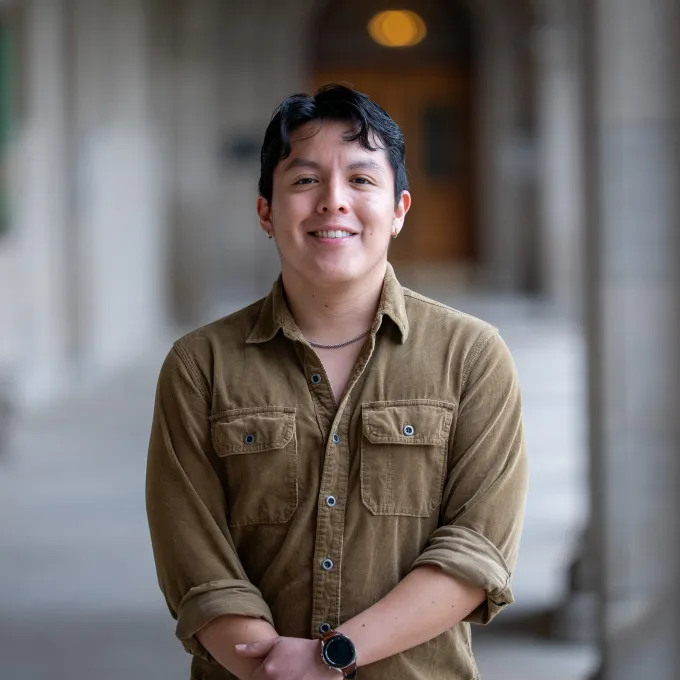
Aaron Barrios, a McDonnell Center Graduate Fellow, was awarded a Graduate Research Fellowship from the National Science Foundation (NSF). The award recognizes Barrios’s achievements and potential for impactful contributions to physics research early in graduate study.

Aaron Barrios

NSF Graduate Research Fellowship

Diego Lopez Gutierrez, a McDonnell Center Graduate Fellow, was selected for the U.S. Department of Energy (DOE) Office of Science Graduate Student Research (SCGSR) program. This program is a nationally competitive award that supports outstanding PhD students conducting part of their thesis research at DOE national laboratories. His project focuses on the tau neutrino, the least studied particle in the Standard Model of particle physics.

Diego Lopez Gutierrez

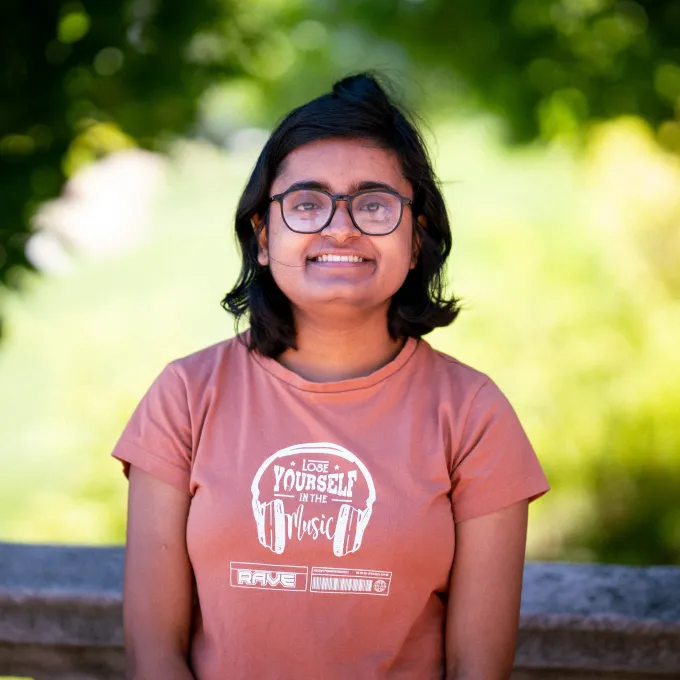
Graduate student Writasree Maitra was awarded a QUP Internship, a program hosted by the International Center for Quantum-field Measurement Systems for Studies of the Universe and Particles, an institute dedicated to uniting innovative measurement science with some of the most profound questions in fundamental physics and cosmology. During her internship, Writasree will work on advancing our understanding of the diffuse supernova neutrino background.

Writasree Maitra

QUP Internship

Alumni News

Do you want to know what our alumni have been doing? Would you like to submit an update of your own? Check out our Alumni page!

Alumni News