New 24-lecture series connects earthquakes, volcanoes, climate and other geologic events to the course of human history
For most of human history, earthquakes, volcanic eruptions, changing climates, and other forces of nature were mysterious events that could seem random or even supernatural. Today, scientists use geology, history, anthropology, and archaeology to understand how those forces have shaped the world and, in turn, human civilization.

Michael Wysession, professor of Earth, Environmental, and Planetary Sciences at Washington University in St. Louis and a McDonnell Center for the Space Sciences fellow, explores those connections in a new 24-lecture video course, The World’s Most Fascinating Geologic Events, from The Great Courses. The series examines events ranging from volcanic eruptions and earthquakes to changing climates and solar storms, showing how forces that shape Earth also shape human societies.
“It’s part of my outreach work on increasing global science literacy,” Wysession said.
Throughout the series, Wysession explores a diverse array of geological milestones and their global consequences, including the devastating 1815 eruption of Mount Tambora, the historic 1811–1812 New Madrid earthquakes, and the impacts of the Little Ice Age, El Niño, and La Niña. By analyzing these phenomena, the course highlights the profound role that climate variations and natural forces have played in the rise and fall of civilizations. The lectures also extend their gaze beyond our atmosphere, with segments dedicated to solar storms and their potential effects on modern technology, as well as the giant impact that scientists believe led to the formation of our Moon.
Wysession has a long history of creating educational resources for broad audiences. He has previously produced several courses for The Great Courses, including How the Earth Works and The World’s Greatest Geological Wonders, and has authored or co-authored numerous science textbooks. Through his teaching and outreach, Wysession works to make the science of Earth and space accessible and relevant to people well beyond the scientific community.
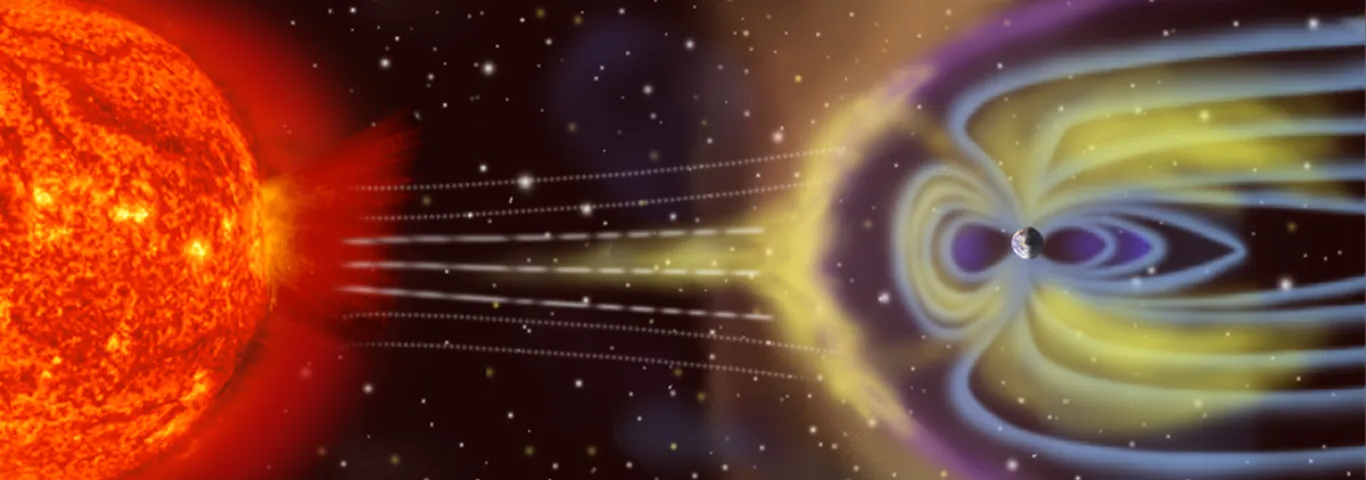
Header image: Artist's depiction of solar wind striking Earth's magnetosphere (size and distance not to scale) (NASA)