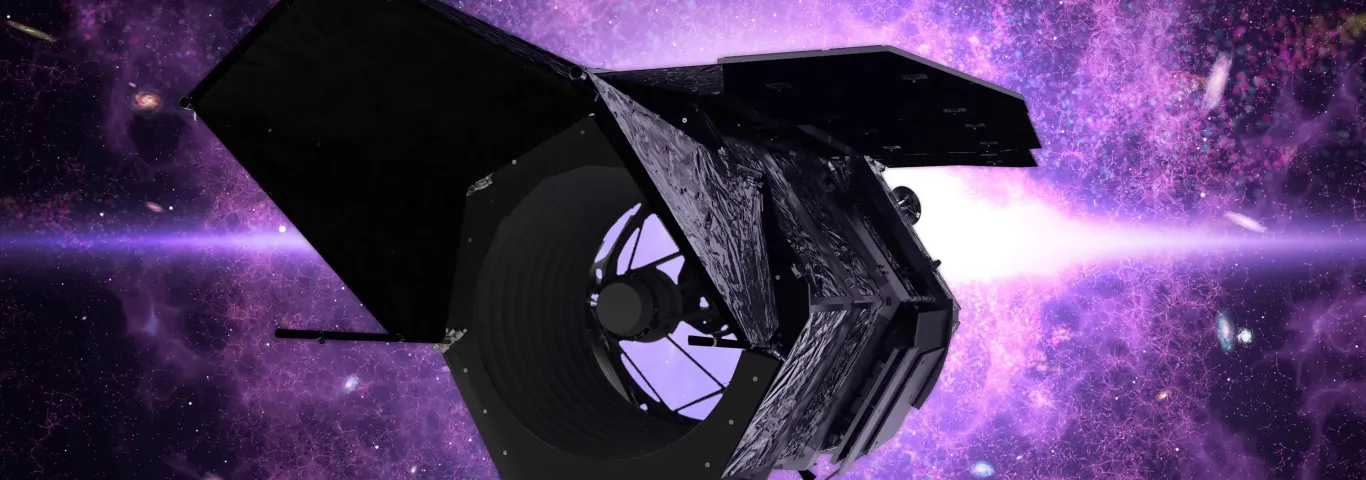
NASA's Nancy Grace Roman Space Telescope promises to transform our understanding of the universe. Four newly approved programs highlight the important role WashU researchers will play in the mission's inaugural science program.
Several members of the AstroMusers research group in the Department of Physics and the McDonnell Center for the Space Sciences at Washington University in St. Louis have been selected to play major roles in four Cycle 1 General Investigator programs for NASA’s Nancy Grace Roman Space Telescope. The proposals span research in cosmology and exoplanets and were among 118 programs selected from 374 submissions in Roman's inaugural Cycle 1 competition.
The selections build on WashU’s existing leadership in the Roman mission. Since 2023, Tansu Daylan, assistant professor of physics, has led the Roman Wide Field Science program, "Preparing for a Leap: Precursor Strong Lensing Science with Roman Towards Precision Cosmology," which is developing methods, simulations, and community resources to help scientists use Roman’s large samples of strong gravitational lenses to study dark matter and cosmology. Together, the new Cycle 1 programs expand WashU's contributions across the mission, from mapping dark matter and measuring cosmic expansion to studying black holes and searching for planets orbiting white dwarf stars.
Roman's broad scientific reach is one reason astronomers are so excited about the mission, said William McKinnon, interim director of the McDonnell Center for the Space Sciences and the Clark Way Harrison Distinguished Professor of Arts & Sciences.
"The Nancy Grace Roman Space Telescope, with its wide-field infrared survey capabilities, is a superb complement to the James Webb Space Telescope, which can see even deeper on specific targets. Both telescopes will orbit near the Sun-Earth L2 Lagrange point, about 1.5 million kilometers from Earth. The images and other data from Roman, analyzed by members of the McDonnell Center for the Space Sciences and their many colleagues, promise to push back the curtain on many of today's most perplexing mysteries of the cosmos."
Daylan said, "The newly approved Cycle 1 programs highlight the expertise of researchers at the McDonnell Center for the Space Sciences in strong gravitational lensing, cosmology, exoplanets, and time-domain astrophysics."
Searching for planets orbiting white dwarfs
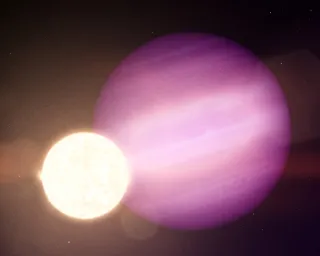
The project "Transiting White Dwarf Exoplanets with the Galactic Bulge Time Domain Survey" will search Roman’s Galactic Bulge Time Domain Survey for planets passing in front of white dwarfs, the compact remnants of Sun-like stars. Because a white dwarf is about the same size as Earth, an Earth-sized planet can block a large fraction of its light and produce a particularly deep transit signal. McDonnell Postdoctoral Fellow Zifan Lin serves as principal investigator, with Daylan as co-principal investigator. The team aims to construct a robust catalog of white dwarfs in the survey field and develop a specialized pipeline to search their light curves for planetary transits. The resulting measurements will help determine how often planets survive the late stages of stellar evolution and how planetary systems evolve after their host stars become white dwarfs.
Building Roman’s definitive strong-lens catalog
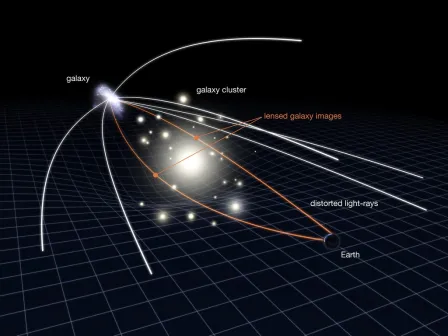
The program "All the Strong Lenses in Roman HLWAS" is an ambitious effort to identify and characterize gravitational lenses discovered by Roman’s High-Latitude Wide-Area Survey, or HLWAS. The program will develop tools to identify and characterize gravitational lenses, produce initial measurements of the detected systems, and better understand which types of lenses Roman is most likely to discover. Its resulting catalog will support studies of dark matter, galaxy evolution, and the expansion of the universe. The program is led by Simon Birrer of Stony Brook University as principal investigator, Tansu Daylan, Xiaosheng Huang, and Justin Pierel as co-principal investigators and includes AstroMusers graduate student Bryce Wedig as a co-investigator. The Roman survey is expected to reveal approximately 100,000 strong gravitational lenses.
Measuring cosmic expansion with lensed supernovae
The project "Strongly Lensed Supernova Cosmology with the Roman HLTDS," in which Daylan serves as a co-investigator, will use Roman’s High-Latitude Time-Domain Survey to discover and analyze supernovae whose light is magnified and split into multiple images by intervening galaxies. Because the different images follow paths of different lengths through space, they arrive at Earth at different times. Measuring these time delays provides an independent way to determine cosmological distances and trace the expansion history of the universe. The observations will also reveal how mass, including dark matter, is distributed within the intervening lens galaxies.
Illuminating dark energy and black-hole growth
The project "Illuminating Dark Energy and Black Holes with Strong Gravitational Lensing in the Nancy Grace Roman Space Observatory Era" also includes Daylan as a co-investigator. It will combine Roman’s high-resolution imaging with deep ground-based spectroscopy to identify and study rare classes of strong gravitational lenses. The team plans to use these systems to measure the dark-energy equation of state and examine how supermassive black holes and their host galaxies evolved together across cosmic time.
Scheduled to launch no earlier than August 30, NASA’s Nancy Grace Roman Space Telescope will investigate dark energy, discover thousands of exoplanets, and address a broad range of questions in astrophysics through wide-field surveys of the universe. Its field of view is roughly 100 times larger than Hubble’s while delivering comparable image quality, enabling surveys of the universe on an unprecedented scale.