Analysis of a meteorite found in Morocco suggests it may share an ancient parent body with the asteroids Bennu and Ryugu.
What do a meteorite found in the Moroccan desert and samples collected from two asteroids millions of miles from Earth have in common?
Quite possibly, they are pieces of the same ancient world.
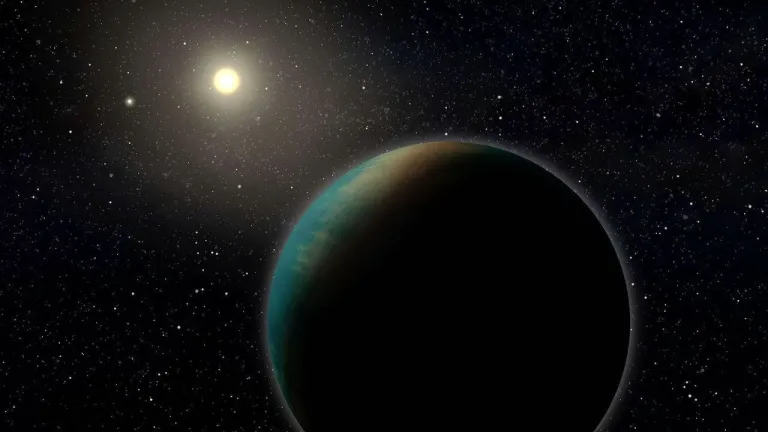
In a new study published in Meteoritics & Planetary Science, Washington University in St. Louis researchers and their collaborators analyzed fragments of the rare meteorite Oued Chebeika 002 and found striking similarities to samples returned from the asteroids Bennu and Ryugu. Their findings suggest that these seemingly unrelated materials may have originated from a common parent body in the early solar system. The researchers have dubbed this proposed ancient world Naunet, after an Egyptian goddess of primordial water. In their proposed scenario, Naunet formed in the outer solar system, where liquid water altered its minerals over time.

The study, led by McDonnell Center Graduate Fellow Megan Broussard in the Department of Earth, Environmental and Planetary Sciences at Washington University in St. Louis, provides a new link between some of the most primitive meteorites on Earth and material collected directly from asteroids by NASA's OSIRIS-REx mission and Japan's Hayabusa2 mission.
The study brought together researchers with expertise in planetary materials, cosmochemistry, isotope geochemistry and meteorite analysis. All of the WashU researchers on the team are affiliated with the McDonnell Center for the Space Sciences and the Department of Earth, Environmental and Planetary Sciences. In addition to Broussard, the team included Katharina Lodders, research professor; Paul Carpenter, senior staff research scientist; Piers Koefoed, who was a staff scientist at the time of the research; Bradley Jolliff, Scott Rudolph Professor Emeritus; and Kun Wang, associate professor.
A meteorite unlike most others
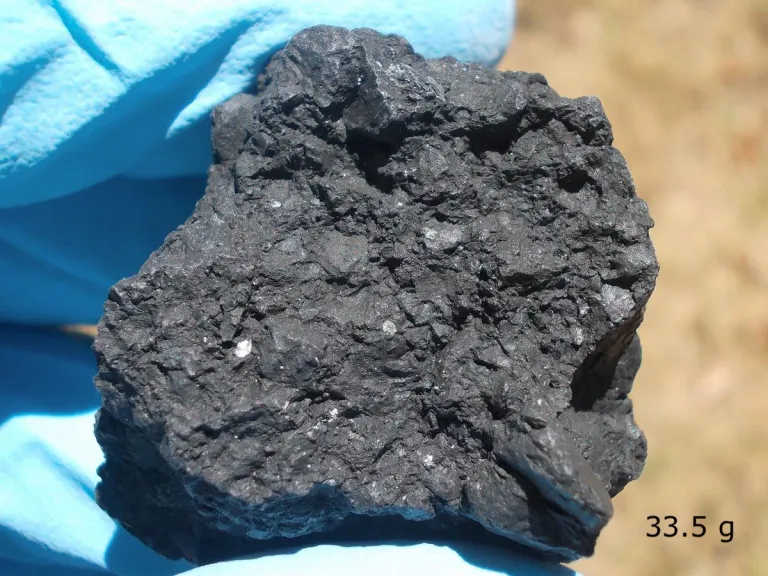
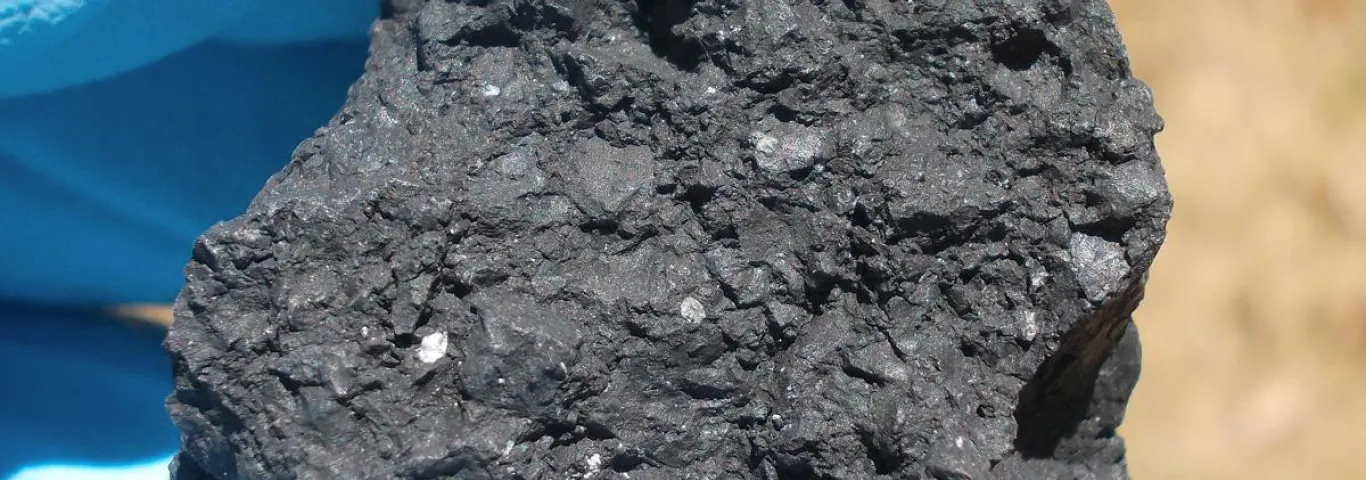
Oued Chebeika 002, or OC002, belongs to an exceptionally rare class of meteorites called CI chondrites. Only 10 meteorites are currently classified as CI chondrites among the more than 80,000 meteorites known, making them some of the rarest meteorites on Earth.
"Among all known meteorite groups, CI chondrites provide the best match to the Sun's composition for non-volatile elements that can be measured in both the Sun and meteorites," said Lodders. "Because not all elements can be measured in the Sun using current spectroscopic methods, CI chondrites are essential for establishing a complete set of solar system abundances. The new CI chondrite Oued Chebeika 002 is therefore especially valuable for refining this reference data set."
"OC002 is an important meteorite not only because of its rare type, but also because of the fortuitous timing of its discovery," said Broussard. "Unlike other CI chondrites that have been exposed to Earth for decades, OC002 is fresh, enabling more direct comparison with pristine samples recently returned from Bennu and Ryugu."
OC002 was discovered in June 2024 near Abteh, Morocco. About 418 grams of material were recovered, including a 136-gram stone with a fresh fusion crust, a thin melted layer formed as it heated during atmospheric entry. The researchers describe it as the most pristine CI chondrite identified to date. That exceptional preservation made OC002 an especially valuable sample for studying the early solar system.
A comparison across the solar system

The team examined fragments of OC002 supplied by Luc Labenne and Jérôme Gattacceca. They analyzed the meteorite’s mineralogy, bulk chemical composition, oxygen and potassium isotope ratios, and concentrations of cosmogenic radionuclides. They then compared those results with measurements from samples returned from Bennu and Ryugu.
"Although Bennu and Ryugu are broadly similar in composition, they have noticeable differences in the abundances of several trace elements," said Wang. "What surprised us most was that two fragments from the hand-sized OC002 meteorite individually match the compositions of the much larger asteroids Bennu and Ryugu. The compositional variation between the two OC002 fragments can account for key elemental differences observed between the asteroids, providing a distinctive geochemical fingerprint linking OC002, Bennu and Ryugu to a common parent body."
OC002 shares important mineralogical, isotopic and chemical characteristics with material from both asteroids. Together, these findings suggest that OC002 and material from Bennu and Ryugu may preserve evidence of a common history.
A common ancestor
The researchers propose that Bennu, Ryugu and the CI chondrites could ultimately trace their origins to the same ancient parent body, Naunet. Later, Naunet broke apart in the asteroid belt, producing smaller bodies. Some of those fragments eventually evolved into rubble-pile asteroids such as Bennu and Ryugu, while other fragments became the source of CI chondrites that later reached Earth as meteorites.
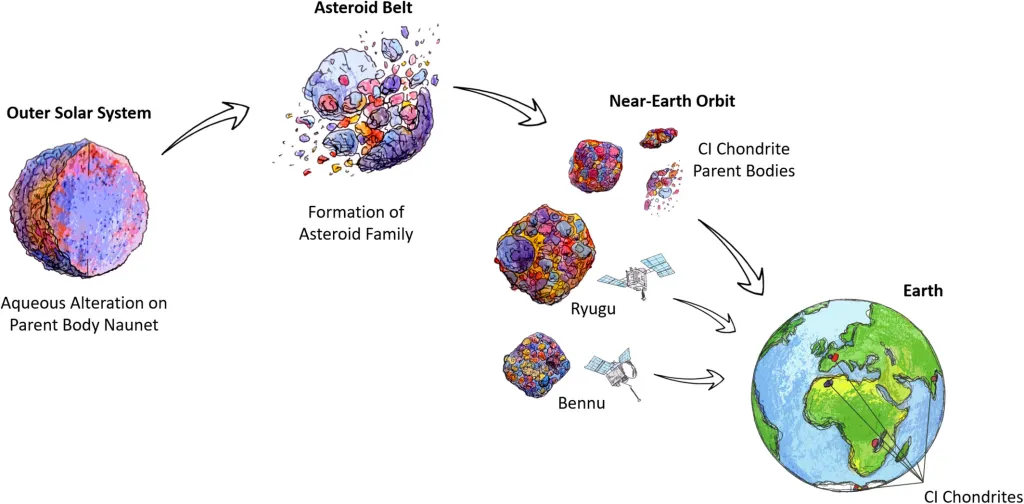
"CI chondrites naturally reached Earth's surface; in this way, OC002 not only connects the asteroids Bennu and Ryugu to a shared history but also places Earth within that history," said Broussard.
The scenario offers a possible explanation for similarities that otherwise span enormous distances and very different kinds of samples: a meteorite picked up in the Moroccan desert and material collected by spacecraft from two near-Earth asteroids.
Their analysis shows how meteorites and asteroid samples can be used together to reconstruct the history of the early solar system. Samples returned from Bennu and Ryugu were collected directly from their parent asteroids and carefully curated to minimize chemical alteration from Earth’s atmosphere and environment. Meteorites, by contrast, pass through Earth’s atmosphere and are exposed to the terrestrial environment, which can alter some of their minerals. Yet despite this exposure, important elemental similarities with pristine asteroid material remain. Detailed comparisons of asteroid samples and meteorites show that rare meteorites such as OC002 can be as scientifically valuable as samples collected directly from asteroids.