Two physicists in Arts & Sciences have been awarded nearly $760,000 by the U.S. Department of Energy for a three-year project that will use artificial intelligence to advance quantum sensing.
Chuanwei Zhang, the Wayman Crow Professor of Physics, and Chong Zu, an assistant professor of physics, will use the funding to explore how machine learning can improve quantum sensing of advanced energy materials.
Quantum sensors can detect extremely subtle changes in magnetic fields, electrical currents, temperature, and strain in quantum materials. Such measurements are particularly valuable for studying materials relevant to emerging technologies, including superconductors, quantum magnets, and other advanced energy materials.
The new project, titled “Machine Learning for Accelerating Solid-State Quantum Sensing of Energy Materials,” will explore how AI and machine learning can help overcome current limitations in the speed, accuracy, and reliability of quantum sensing. The team will also use AI to analyze large, complex data sets and generate detailed maps of magnetic fields, temperature, and strain in quantum materials.
Zu said the new sensors are expected to help researchers image complex materials more quickly, accurately, and reliably, advancing research into future energy and quantum technologies.
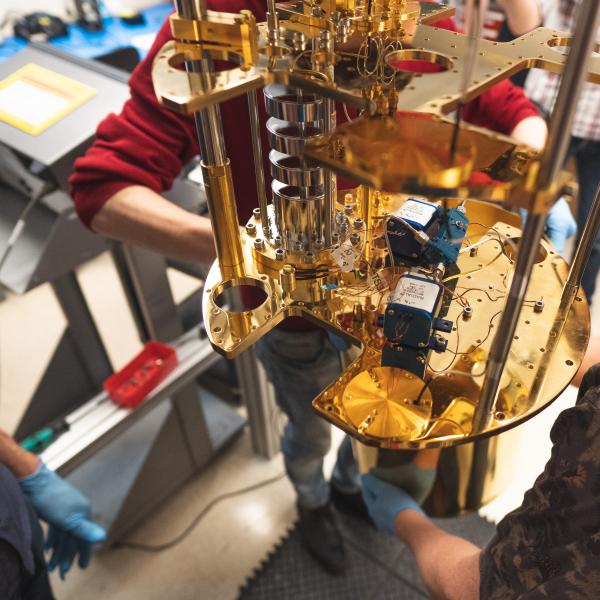
Quantum sensing has been a major research focus for both Zhang, co-director of the Center for Quantum Leaps, and Zu, a fellow of the center. Both researchers have been developing and applying quantum sensors based on atomic-scale defects in diamond. These defects are exceptionally sensitive to their local environments, allowing researchers to probe magnetic fields, temperature, strain, and other physical properties at microscopic and even nanoscopic scales.
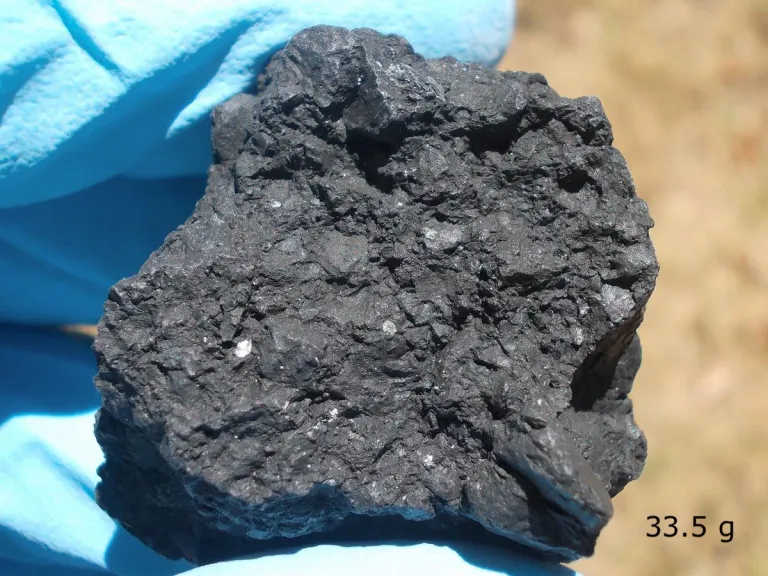
Previous work at WashU has been supported in part by the Center for Quantum Leaps, the National Science Foundation, and the NSF Research Traineeship program Linking Quantum Sensing Technologies across Disciplines (NRT LinQ). With this support, WashU researchers have used quantum sensing to peer into the inner workings of living cells and investigate the history of Moon rocks, among other applications.
Despite these advances, important challenges remain. Quantum sensors must become faster, more accurate, and more robust against noise if they are to tackle increasingly complex scientific and technological problems. The new Department of Energy funding will allow Zu and Zhang to investigate how AI can help address these challenges at multiple stages, from sensor operation and optimization to data analysis and image reconstruction, as well as the development of entanglement-enhanced quantum sensors.
“We thank the Department of Energy for this generous support,” Zhang said. “Our team’s ultimate goal is to develop an AI-powered quantum sensing platform that can be broadly applied across the physical and life sciences. This effort also closely aligns with WashU Arts & Sciences’ strategic priorities in both quantum science and artificial intelligence.”